


Diving in Puerto Galera: Where the Dive Sites Are and Where the Boat Takes You

You've already decided to dive Puerto Galera. You open a map of the dive sites and see dozens of names: Canyons, Hibo, Manila Channel, Sinandigan. It's hard to tell where they all are, which ones the boat reaches on a normal day, and what's left to see if this isn't your first trip.
Here's the short version. Puerto Galera has more than 50 dive sites along the north coast of Mindoro. Most are 15 to 25 minutes by boat, and a few you can dive straight from the beach. The best dive sites in Puerto Galera are spread along the whole coast, and we dive all of it, from Talipanan Beach in the west to Sabang Bay and Sinandigan in the east. Your Deluna guide picks the site for each day based on your level, the current and the visibility.
Still choosing an island? Start with Which Philippine Island to Pick for a Diving Trip. This article is only about Puerto Galera.
Why is Puerto Galera called the diving capital of the Philippines?
Because the town council officially declared it that in autumn 2023. The main reason is the marine diversity of the Verde Island Passage, the strait the town sits on. The other is the number of dive shops: more than sixty registered dive centers here are members of the big international diving organizations 1.
The sea here has been protected for a long time. The area around Puerto Galera is a UNESCO biosphere reserve, and protecting the coral reefs is listed as one of its main goals 2. Why marine biologists rate this strait so highly is covered in The Philippine Dive Sites Worth Planning a Trip Around.
Where are the Puerto Galera dive sites?
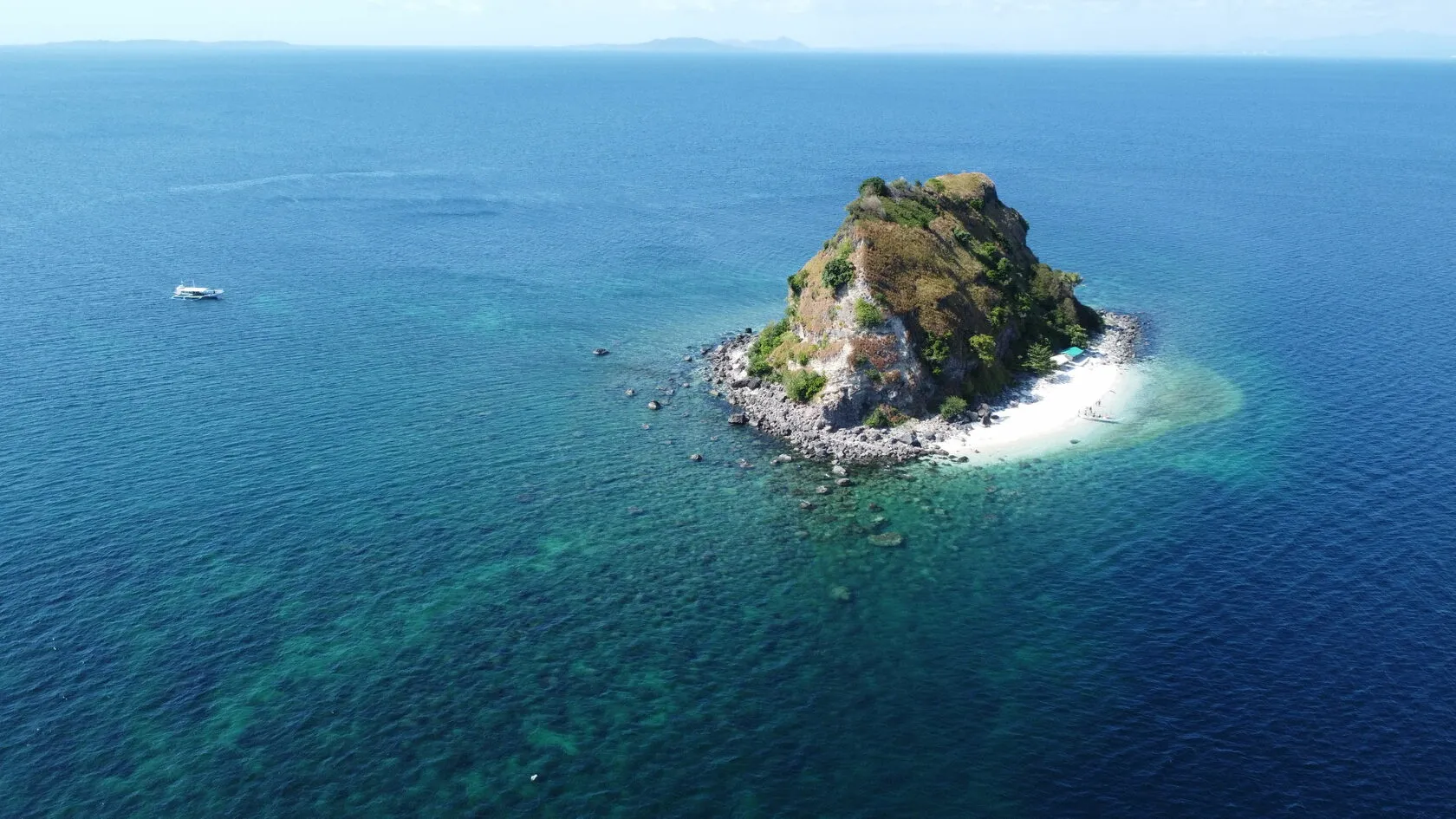
All along the north coast, but most of them are packed around Escarceo Point and Sabang Bay. That's where you find Canyons, West Escarceo and the Sabang wrecks, and southwest of the point, Sinandigan Wall. Batangas Channel is at the northeast end of the harbor. And Hibo Reef is right by our dive center on Aninuan Beach, just 500 meters away.
Most dive shops here stick to 15 or 20 main sites around Sabang, or charge extra for the far ones. We choose from every site on the coast at no extra cost, so in a week you can easily dive a really mixed bag of sites.
Which Puerto Galera dive sites rarely make the lists?
The ones that live in the shadow of Canyons and Hibo. On a normal day, your guide can take you to any of them.
- Monkey Beach. A slope near Sabang on the outer side of the bay, covered in corals and sponges. The reef is in good shape, with lots of fish, shrimp and clams. It's open to currents, so it's not for beginners. In the shallows the slope flattens out and runs up to the rocks by the beach.
- Manila Channel. Live corals and walls, groupers, octopus, seahorses and big turtles. Expect some moderate current at times.
- Batangas Channel. Corals and sponges, morays, lionfish, frogfish and clams.
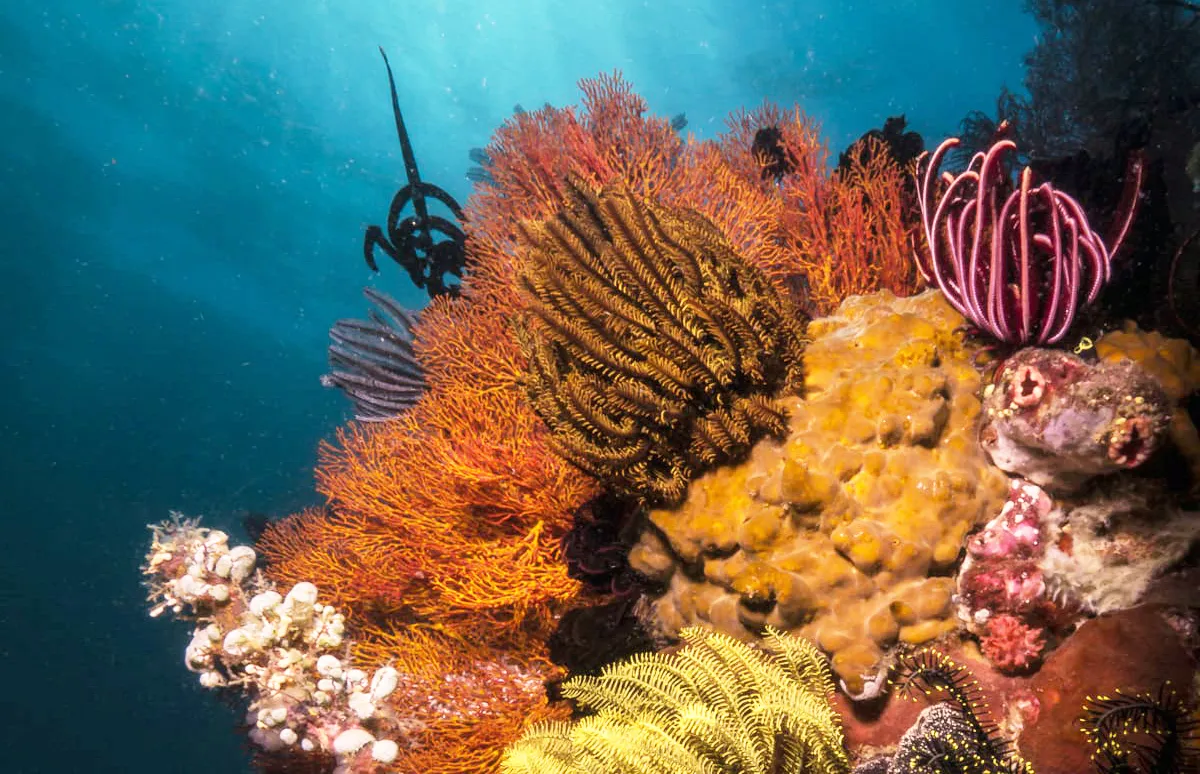
- West Escarceo. Corals in all kinds of shapes, snappers, tuna. A favorite with underwater photographers.
- Sinandigan Wall. A coral wall that draws both reef fish and pelagics, the open-water fish. People come here for nudibranchs, the small brightly colored sea slugs: at least seven species are found on this wall.
What if there's current or poor visibility on your dive day?
Then your guide takes you somewhere else. The current at the same site changes from day to day. West Escarceo on a calm day works as a training site for beginners, and with current it gets tough even for intermediate divers. Visibility is similar: it's usually 18 to 20 meters, but sometimes it drops sharply. On those days we head to another part of the coast, where the water is usually clearer.
If you want to feel confident diving in current, you can take the Drift Diver specialty with us. You learn to plan a dive so the current carries the group along the route for you. The course is $200.
What does a dive day in Puerto Galera look like?
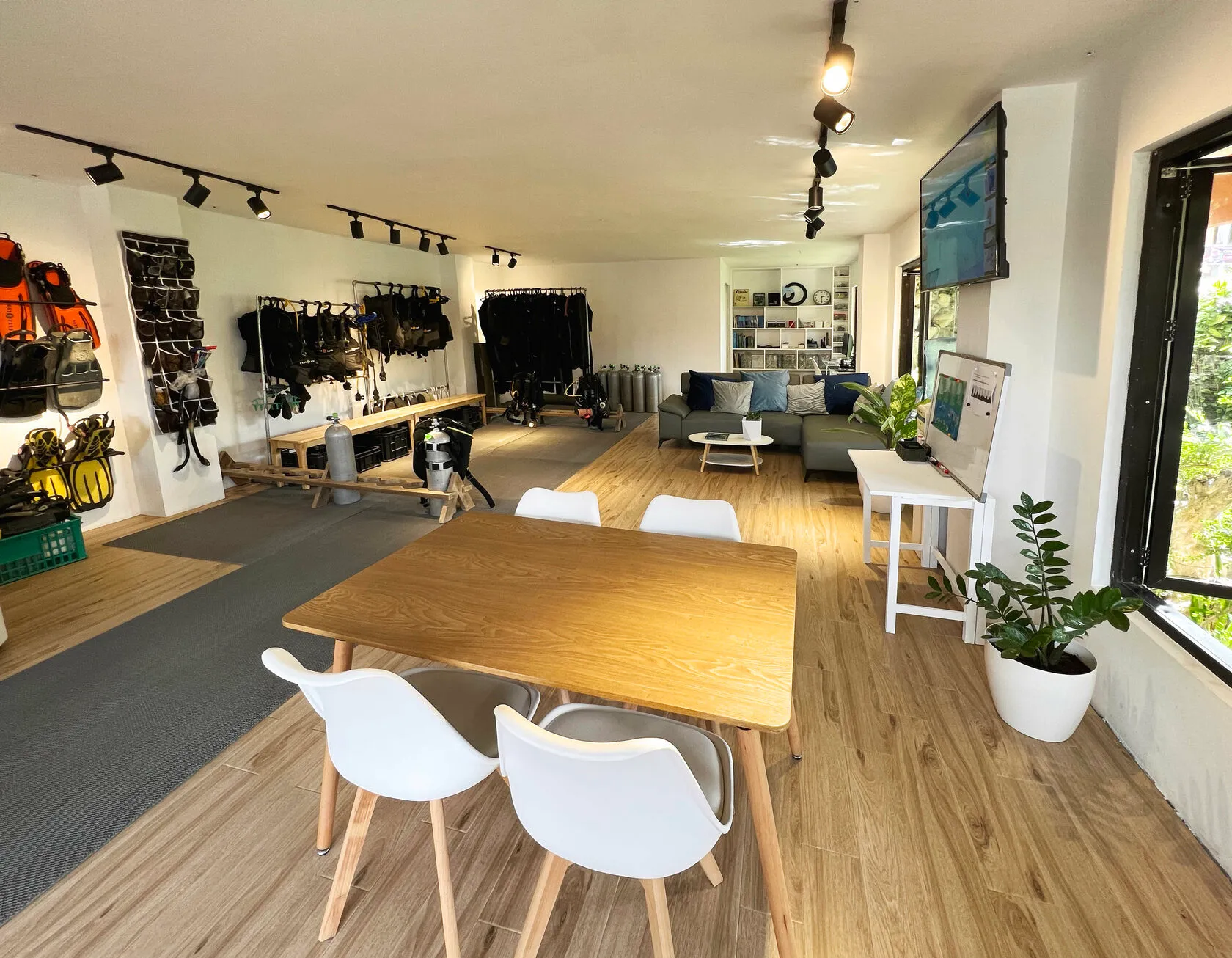
After breakfast you meet at the dive center. We set up and check the gear, and the guide gives the briefing, the plan for the dive. The boat leaves right from the beach, so there's no drive to a port. Usually we do two dives back to back and take the surface interval on the boat while it moves to the next site. Around 2 pm we come back for lunch, and after that there's an optional third dive. Night dives run every evening if you want one.
We run our own bangka, a local outrigger boat, for up to 15 people. On board there are tank racks, a toilet, water and hot drinks. The sites are close, so if you want, you can fit in four or five dives a day.
Your first dive of the trip is a check dive at Tamaraw Reef. After the flight, it's a chance to get your skills back, and your guide gets to see how you dive and picks the next sites to match.
And where are the sharks, Canyons and wrecks?
Right here, and we've already covered them in detail. Hibo Reef with its whitetip sharks, Canyons with the swim-through at the Hole, and the Giant Clams field are in The Philippine Dive Sites Worth Planning a Trip Around. The Sabang Wreck and Alma Jane are in Where to Dive Shipwrecks in the Philippines.
You'll often see batfish around the Alma Jane, like the ones on the cover. Adult longfin batfish often hang around wrecks in small groups 3.
Besides the sites off the coast, we run full-day trips from Puerto Galera to Verde Island (diving there needs Advanced Open Water and 50+ logged dives) and to Anilao. Each trip is $85, with dives paid separately. Details are on the Verde Island and Anilao pages.
Which Puerto Galera sites to dive on your first trip
A mix: a shallow reef, a wall, a site with current, and a wreck if your certification allows it. That's what makes the Puerto Galera coast so handy: all of it is within half an hour by boat, and in a week you'll see a good part of what the Verde Island Passage is known for.
Tell us how many days you're coming for and which sites from this list you'd like to see. We'll put together a day-by-day dive plan for your level and let you know where a specialty course would help.
Start here: Which Philippine Island to Pick for a Diving Trip