


Where to Dive in the Philippines from November to March

Your holiday falls in November, over Christmas and New Year, or in February, and you're wondering where to dive in December in Asia: somewhere with warm water and plenty to see. The Philippines is a good bet, but it's a big country. While one coast is dry, another gets rain, so where you go decides how many days you actually get to dive.
The best diving in the Philippines in December, and from November right through to March, January included, is on the west side of the country. These are the months of the amihan, the northeast monsoon. It's a seasonal wind, and the rain it brings falls mostly on the east coasts 1. The dates shift from year to year: in 2025 the weather service PAGASA announced the end of the amihan on 26 March 2 and the start of the new season on 27 October 3. Puerto Galera, on Mindoro island, is on the west, and that's where Deluna Dive Center is. For us the best diving months start in October and run until July. In winter you can dive the local dive sites and take trips from here to Verde Island, Anilao and Apo Reef.
We've covered the weather, water and room prices month by month in separate articles: November, December and January, February and March. This one is about where to go and what you'll see underwater.
What can you see diving Puerto Galera in November?
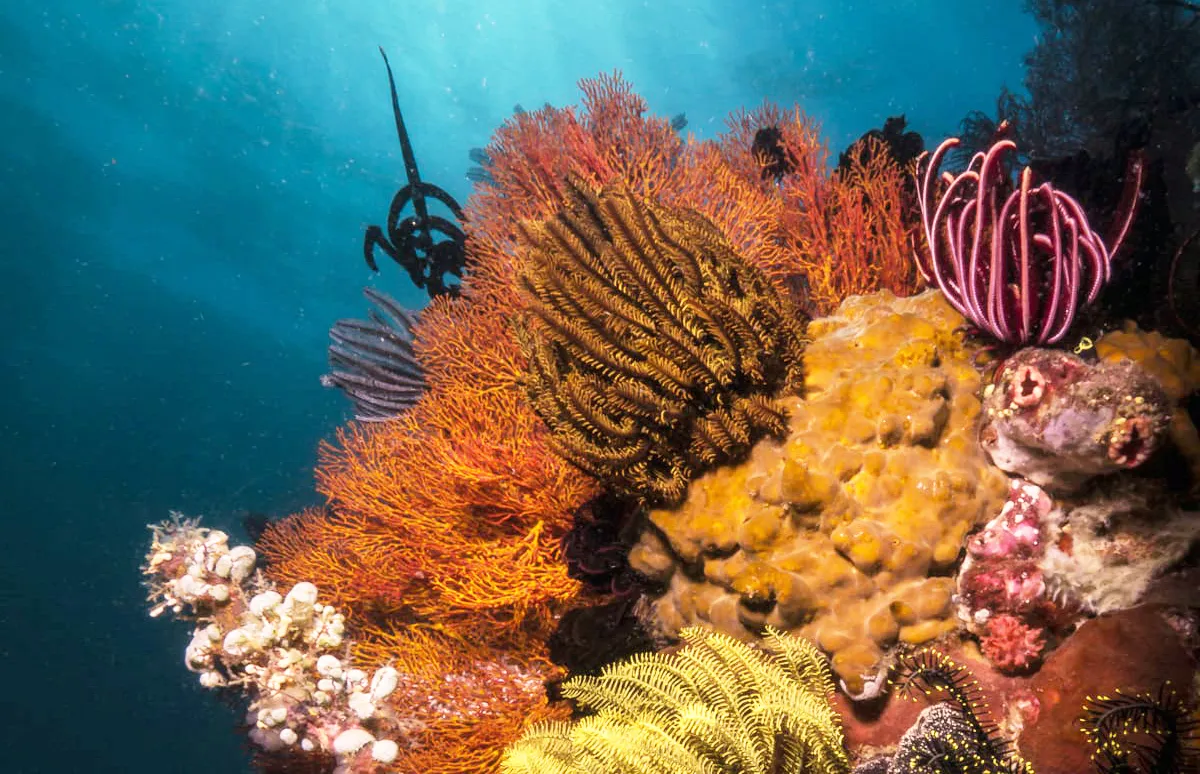
Almost everything people come here for. The water in November is still at its summer temperature, so a 3 mm wetsuit is enough. Underwater you get everything Mindoro is known for, macro included: that's what divers call finding and photographing the small reef critters.
On the Sabang Wrecks, in Sabang Bay at 18–23 meters, you'll find seahorses, ghost pipefish and frogfish of all sizes. At the end of the dive the group swims out to a seagrass patch where turtles graze. Coral Garden is shallow and full of nudibranchs, those bright sea slugs, and moray eels. It's a good site if you've just got your first certification.
When do you see more sharks in Puerto Galera: December, January or February?
January and February. In our experience these months bring more big animals to Puerto Galera, and we see sharks more often than in summer. The water is at its coolest of the year, though, so from December to February we dive in 5 mm wetsuits.
The main shark site is Hibo Reef, not far from the dive center. Whitetip reef sharks live here. It's a deep dive, 25–40 meters, sometimes with current, and you need the Deep Diver specialty for it. More in our article on the best dive sites.
The other one is Kilima Drift. On a drift dive the current carries you along the reef. A thresher shark often shows up here over the fields of table coral. You'll know it by its long tail, shaped like a whip.
What changes for divers in March?
The water warms up, and in March a 3–5 mm wetsuit is enough. Underwater you'll find the same macro, turtles and soft-coral walls, though in our experience sharks show up more often in January and February. March is the start of our best months, but it's also the busiest time of year: some hotels raise their prices, so book your room as soon as you've bought your flights.
Which trips can you take from Puerto Galera?
Verde Island, Anilao and Apo Reef. None of them needs a flight: we go to Verde and Anilao by boat, and to Apo by boat and minivan.
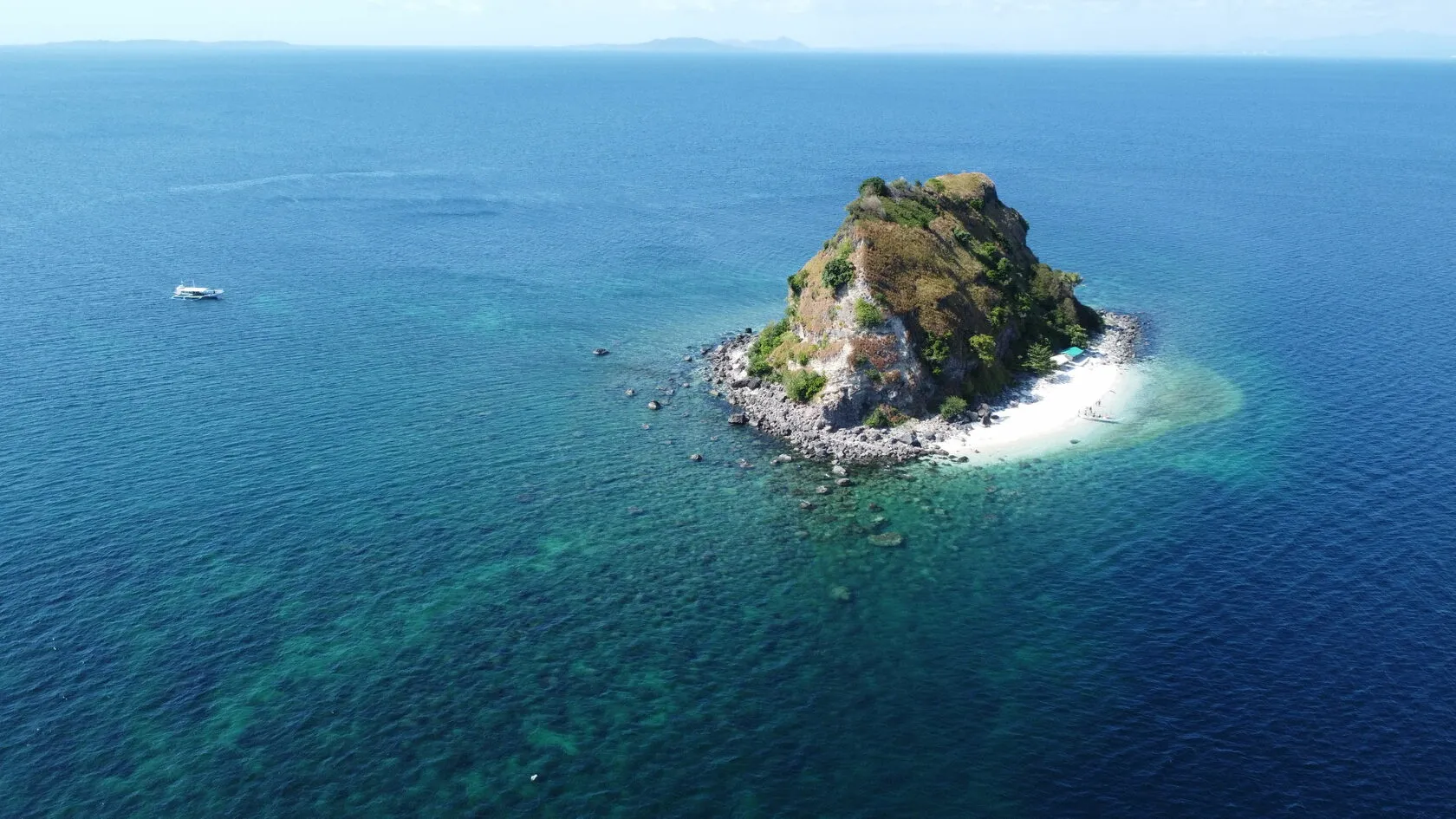
Verde Island is a wall covered in big soft corals and gorgonians, also called sea fans. Visibility can reach 40–45 meters, and bits of Chinese porcelain from Spanish galleons still lie on the bottom: the first one wrecked on the reef off the island's south coast in 1620. The currents here are strong, so we only take divers with Advanced Open Water and at least 50 dives. Everyone else can come along with the group and spend the day on the island. The trip runs with 6 people or more.
Anilao is on Luzon, across the strait, about an hour and a half by boat. We dive Sombrero Island and Beatrice Rock: walls, soft corals and lots of macro. After the dives there's a barbecue on Maricaban Island. The trip runs with 6 people or more.
Apo Reef is the biggest coral reef in the Philippines, out in open sea off the west coast of Mindoro. Divers see reef sharks and green turtles there, and mantas if they're lucky. The tour takes 3 days, with a night camping in tents on the island. Open Water Diver is enough. That's the first certification, and it lets you dive to 18 meters without an instructor. Groups run with 8 people or more; ask us for the next dates. More in our article on Apo Reef: How to Get There and What You'll See Underwater.
Where else in the Philippines can you dive from November to March?
Cebu: Moalboal for the sardine school close to shore, and Malapascua for thresher sharks. Of the winter months, only March works for Tubbataha Reefs in the Sulu Sea: the season there runs from March to June 4. We don't run trips there. How to get to these places and how many days to plan is in our article Which Philippine Island to Pick for a Diving Trip.
How to plan a week of diving between November and March
A week in Puerto Galera gives you a few days on the local dive sites, a day on Verde and a day in Anilao. If you have enough days and a group comes together, add the Apo Reef tour. In January and February, add a dive at Hibo Reef if your certification allows. Boats across the strait depend on the amihan: on a windy day we move the trip to another day. If you're not certified yet, the first 3–5 days go to your Open Water Diver course. That lets you dive the local sites to 18 meters and join the Apo Reef tour. Verde needs Advanced Open Water and at least 50 dives, and Hibo Reef, at 25–40 meters, is deeper than a first certification allows.
Our sample 14-day program lays out the local dive sites, Hibo Reef, Kilima Drift, Verde and Anilao day by day, with land tours in between. We adjust it to how many days you have and your level. Send us your dates and experience, and we'll tell you what you can fit in.
Start here: Which Philippine Island to Pick for a Diving Trip