


The Philippine Dive Sites Worth Planning a Trip Around

Lists of the best diving spots in the Philippines usually give you nothing but region names: Malapascua, Coron, Anilao. But you don't dive a region. You drop in at a specific spot: a wall, a wreck, a reef where sharks live. And each one needs a different level of experience.
Many of the best diving spots in the Philippines are in the Verde Island Passage, between Mindoro and Luzon. Beginners get the shallow coral gardens of Puerto Galera and a field of giant clams. Divers with Advanced Open Water, the second certification that takes you to 30 meters, get the Canyons and the wrecks. Experienced divers get Hibo Reef with its sharks and the Verde Island walls with their strong currents. Below, site by site: what you'll see, what level you need and when to come.
If you're still choosing an island, start with Which Philippine Island to Pick for a Diving Trip. This article is about the dive sites themselves.
Why does the passage off Puerto Galera make lists of the best diving spots in the world?
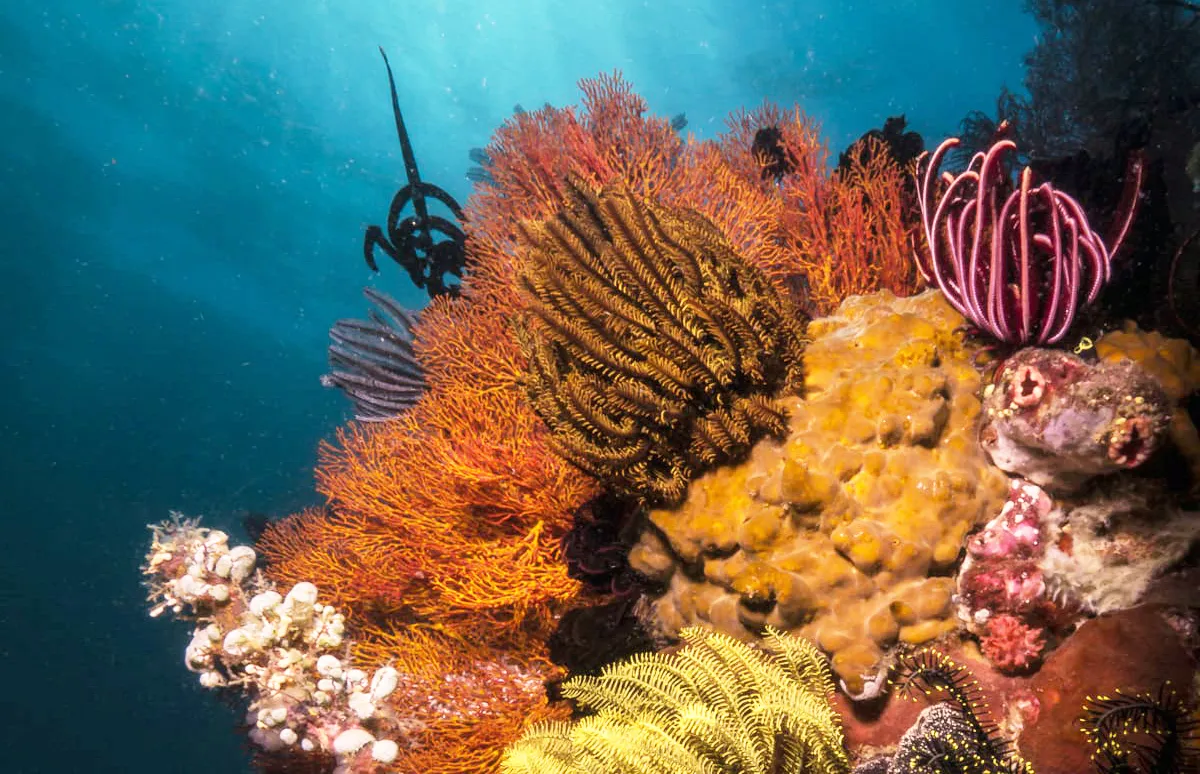
Because of the number of fish species. Ichthyologists Kent Carpenter and Victor Springer mapped where thousands of marine shore fish species live. The densest cluster turned up in the Philippines, which is what they called their paper: "the center of the center" of marine shore fish diversity. And on his dives around the country, Carpenter counted the most species in the Verde Island Passage 1.
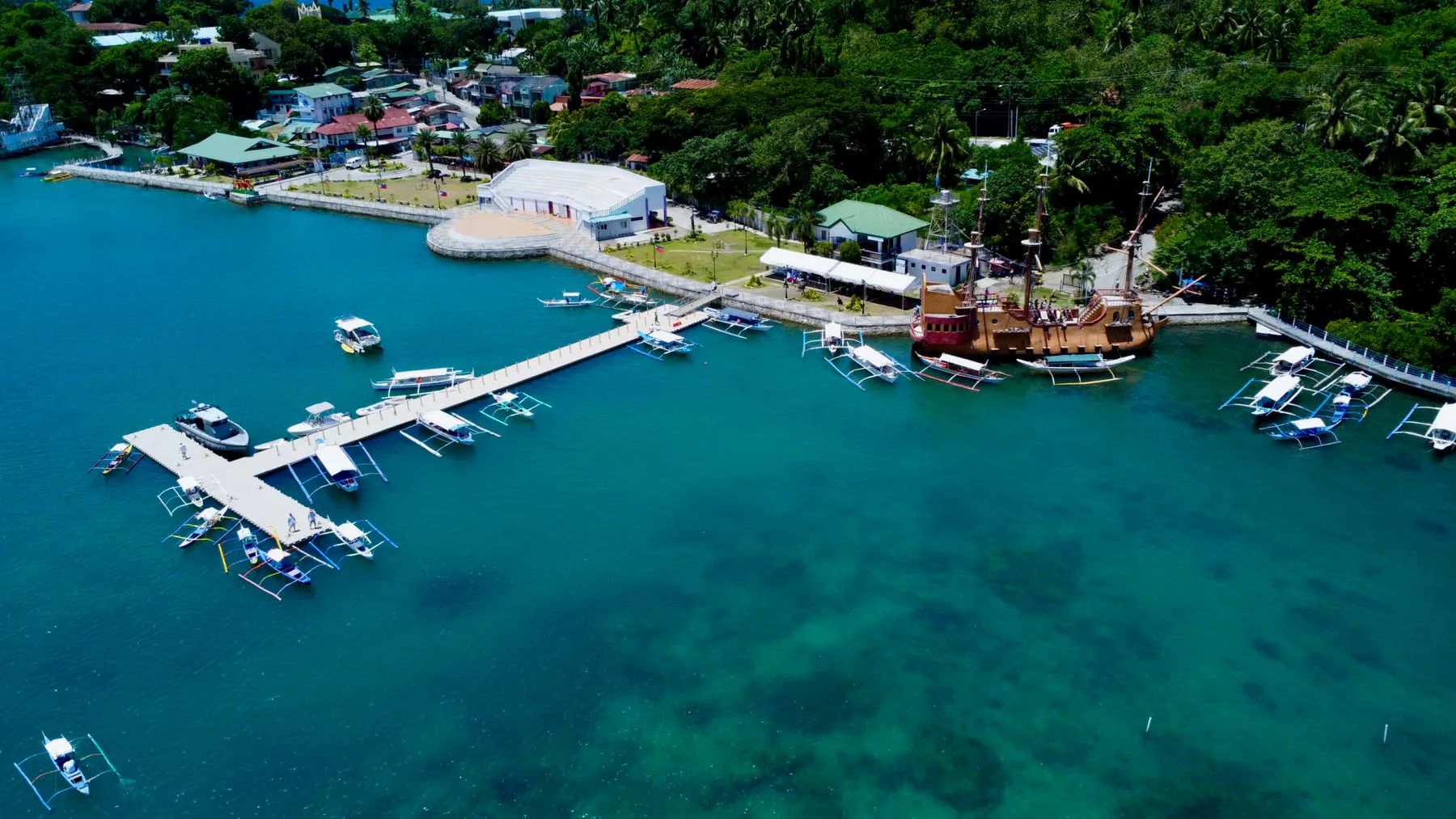
Puerto Galera on Mindoro is on one side of the passage, Anilao on Luzon is on the other, and Verde Island sits in the middle. Every site we take divers to from Puerto Galera is in these waters, except Apo Reef, out in open sea west of Mindoro.
Where can you dive with your first certification?
On shallow coral reefs. With an Open Water Diver card you can go to 18 meters, and Puerto Galera has plenty of sites where nearly everything worth seeing is above that.
- Giant Clams: at 10 to 15 meters the bottom is covered with giant clams, bivalves up to a meter across. You can drift slowly over them and look at the patterns on their mantles, all blue and purple spots.
- Tamaraw Reef: hard and soft corals at 14 meters on average, with morays, cuttlefish, frogfish, turtles and ribbon eels.
- Big La Laguna: corals and small critters at 12 meters on average: nudibranchs, stonefish, sea snakes. A good site for macro, which means photographing tiny animals up close.
- Pink Wall: corals, sponges and stonefish. It works for beginners and makes a great night dive.
Where can you see sharks near Puerto Galera?
On Hibo Reef, 500 meters from our dive center. A family of whitetip reef sharks lives here, about a meter and a half long, and you'll also meet grey reef sharks, tuna, mackerel and rays. Whitetips usually rest in caves and under ledges during the day and are more active at night 2, so you see them lying calmly on the reef.
Hibo is a deep site: 35 meters on average, deeper than the 30-meter limit of Advanced Open Water, and there can be current. For these depths there's the Deep Diver specialty, which lets you dive to 40 meters; with us it costs $320. In our experience you see sharks here more often in January and February, when the water is cooler.
Canyons and wrecks: where to dive with your second certification
Advanced Open Water opens up sites deeper than 18 meters and sites with current.
- Canyons: one of the prettiest and busiest sites in Puerto Galera. You start by going through the Hole, a natural opening in the rock, and the canyons run on from there. You always see morays, tuna and schools of barracuda. There can be current here, so the guide keeps a close eye on it.
- Sabang Wreck: three small sunken boats at 18 to 23 meters. Around them you'll find seahorses, ghost pipefish and frogfish from tiny to huge. The dive ends on a seagrass patch where turtles often graze.
- Alma Jane Wreck: a thirty-meter cargo ship at around 30 meters, covered in soft corals. The group swims around the ship, over the deck and inside it. Going into the hull feels easier after the Wreck Diver specialty, which costs $350 with us.
- Dungon Wall: a wall of soft corals, with the electric clam Ctenoides ales living at 24 meters. The edges of its mantle flash like a neon sign. Researchers found that it doesn't make its own light: the flashes are light bouncing off tiny silica spheres in its tissue 3.
Verde Island: walls, currents and bubbles from the seabed
Verde is for experienced divers: we take divers with Advanced Open Water and at least 50 logged dives. The reason is the current. At Washing Machine the water runs through the canyons and starts to spin like a washing machine, and in a second it can carry a diver from one canyon to the next.
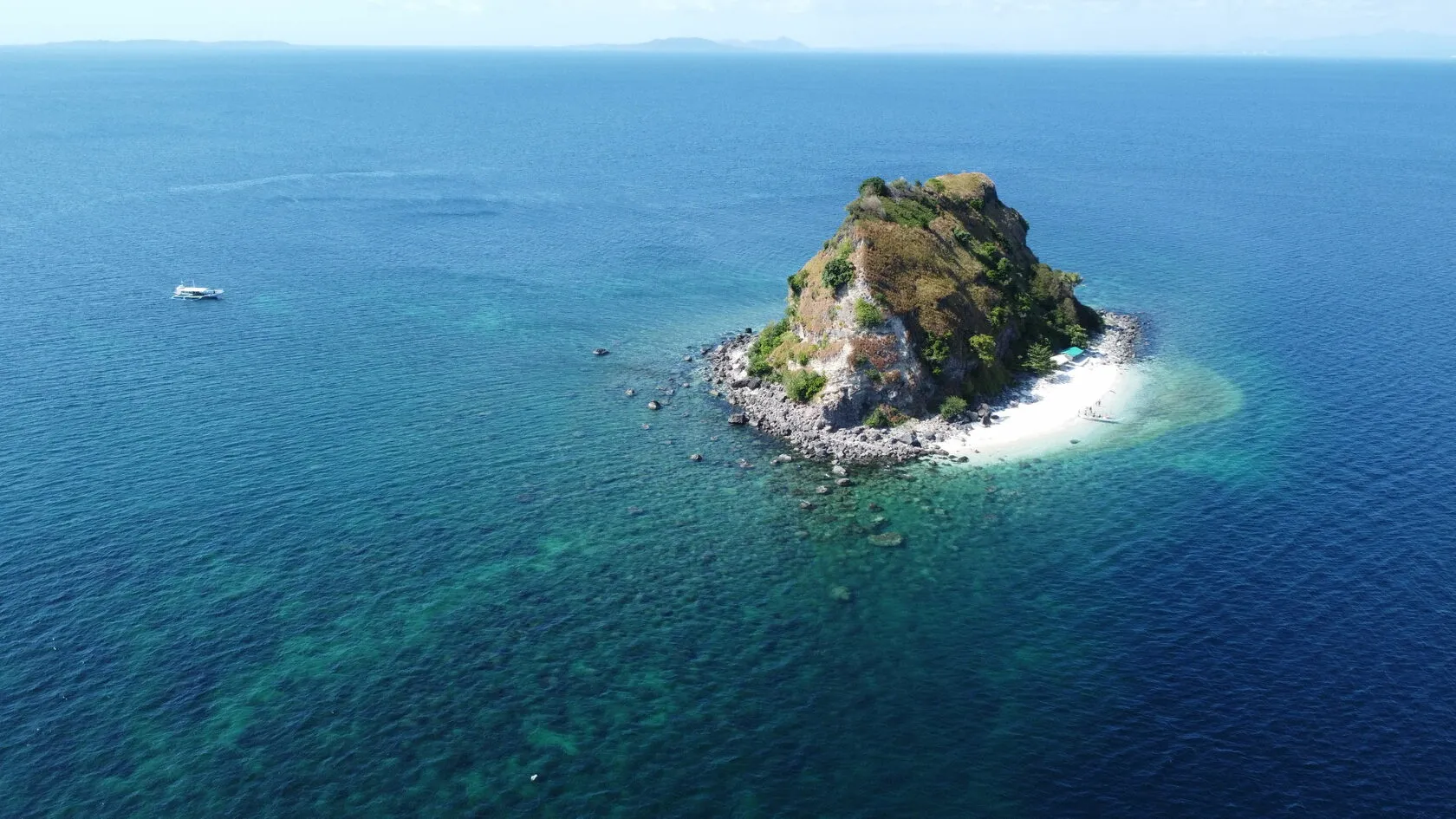
The two main dives have current too. Verde Drop-off is a wall covered in soft corals and big gorgonians. Verde Plateau has the same corals plus schools of fish. Gas bubbles rise from the bottom because of volcanic activity, and off the south coast, where a Spanish galleon struck the reef in 1620, shards of Chinese porcelain still lie on the bottom. Verde is an hour and a half by boat, and after the dives there's a barbecue on the island. The trip with us is $85, dives extra. Non-divers can come along too.
Anilao and Apo Reef: two trips from Puerto Galera
Across the passage is Anilao, a macro spot. We go there for a full day: about an hour and a half by boat, dives at Beatrice Rock and Sombrero Island, and a third dive if you want one. The trip is $85, dives extra; details on the Anilao Dive Trip page.
Apo Reef is the largest coral reef in the Philippines, with reef sharks and turtles, and the trip there takes three days. How the tour works and who it suits is in Apo Reef: How to Get There and What You'll See Underwater.
The thresher sharks of Malapascua, the Moalboal sardine run, the Japanese wrecks of Coron and the Tubbataha Reefs are also on the list of the best spots in the Philippines, but they're on other islands and need separate trips. For a comparison of regions by season and level, see Where to Dive in the Philippines.
When to dive Puerto Galera
You can dive Puerto Galera all year, and the best months are October to July. Visibility and calm seas depend on the month, and the current at the Canyons, Hibo and Verde changes from day to day, so the guide picks the site for the day based on conditions. Month-by-month details are in When to Dive the Philippines: Weather and Water by Month.
How to plan a week of diving around Puerto Galera's best sites
Start on the shallow reefs: Tamaraw Reef, Giant Clams, Big La Laguna. After a long flight or a break from diving, easy first dives are better. Then move on to the Canyons and the wrecks, and if you have the experience and the right card, Hibo and a day on Verde. If your certification doesn't cover the site you're coming for, you can do the course with us in the first days of your trip.
Tell us your certification and how many dives you have logged, and we'll tell you which of these sites you can dive and in what order.
Start here: Which Philippine Island to Pick for a Diving Trip